Written by the Caxton Pharmacy team · Checked against NaTHNaC guidance updated 18 February 2026.
A safari is the trip people plan for years, and yellow fever is the jab that most often complicates it, not because the answer is hard, but because the answer changes depending on which side of the Kenya–Tanzania border you will be standing. This guide untangles the safari-specific rules. The disease itself, the certificate and the full country lists are covered in our complete yellow fever vaccine guide.
Kenya and Tanzania: same safari, different rules
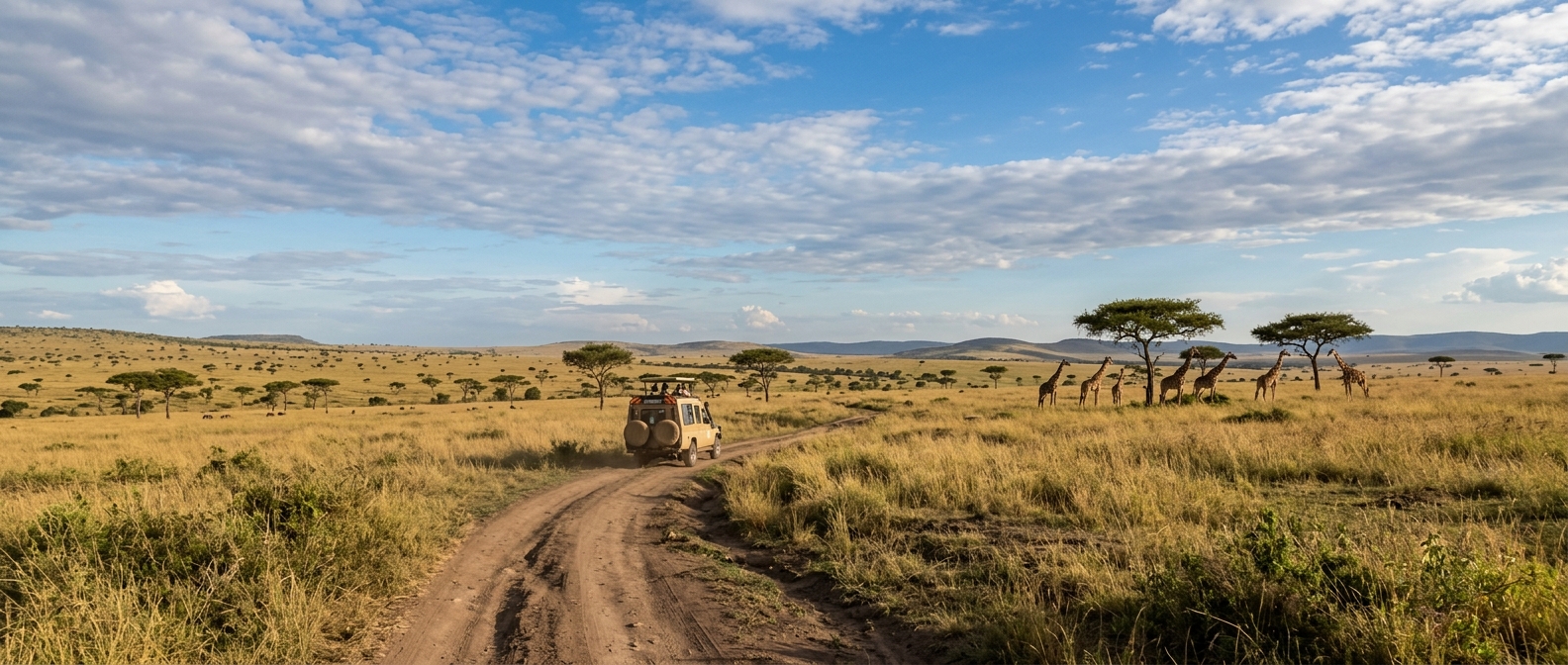
Here is the fact that surprises almost every safari planner. Kenya is classed by the WHO as a country with yellow fever risk in parts of its territory, so vaccination is commonly recommended for Kenyan itineraries. Tanzania, immediately next door and home to the Serengeti and Kilimanjaro, is classed as low potential for exposure throughout, so the vaccine is generally not recommended for Tanzania alone, and travellers aged 60 or over should not have it for Tanzania alone, because at that age the vaccine’s rare risks outweigh a negligible disease risk.
| Itinerary | Vaccination position | Certificate position |
|---|---|---|
| Kenya only (from the UK, direct) | Commonly recommended for risk areas; itinerary-specific | Not demanded from UK arrivals; carry it if vaccinated |
| Tanzania only (from the UK, direct) | Generally not recommended; not given to over-60s | May be demanded if arriving via a risk country |
| Kenya + Tanzania combined | Assessment needed: the Kenya leg may justify vaccination | Tanzania may require the certificate because you arrive from Kenya |
| Multi-country (adding Uganda, Rwanda etc.) | Uganda is a risk country; Rwanda is low-potential | Border-by-border; every crossing counts |
KEY POINT — the combined-safari trap. Fly into Nairobi and cross into Tanzania, and Tanzania may demand a certificate precisely because you arrived from Kenya, a risk country, even though Tanzania alone would not have needed one. The order of your itinerary changes your paperwork.
Does a safari itself raise your risk?
Yellow fever is spread by mosquitoes that bite in daylight, from dawn to dusk, which is exactly when you are out on game drives. Risk in any one place depends on the region, season and how much time you spend exposed, and that is what the pre-travel risk assessment weighs. What a safari certainly demands, vaccinated or not, is disciplined bite avoidance: effective repellent, long sleeves and trousers at dawn and dusk, and treated nets where camps provide them. The same measures protect you against malaria, which for many East African itineraries is the bigger daily concern and needs its own tablets; we cover both in one consultation.
Over 60 and heading on safari?
Safari demographics being what they are, this question comes up constantly. The position is nuanced but navigable. For genuine risk areas, such as parts of Kenya or Uganda, over-60s can often still be vaccinated when the travel is unavoidable, after a careful individual assessment, because real disease risk justifies the vaccine’s small but age-increased risks. For low-potential destinations, Tanzania included, the vaccine is not given at 60 plus. The full eligibility picture, including the conditions and medicines that rule vaccination out entirely, is in our main Bromley yellow fever guide, and where vaccination is not appropriate a Medical Letter of Exemption can be discussed.
KEY POINT. For older safari travellers the right answer is genuinely individual: it depends on which parks, which season, which borders and your health. Ten minutes with your full itinerary beats any generalisation on the internet, ours included.
The rest of your safari vaccination checklist
Yellow fever rarely travels alone on an East African checklist. Depending on your route and activities, your consultation will also cover typhoid and hepatitis A (food and water risks), tetanus/diphtheria/polio boosters, rabies for longer or remoter trips, and anti-malarial tablets matched to the specific regions you will sleep in. Sorting everything in one plan matters for timing too: yellow fever needs 10 days before arrival for a valid certificate, some vaccines are courses, and children’s MMR needs four weeks’ separation from yellow fever.
Booked the safari? That is the moment to book the jabs. Check availability and book your travel consultation at our Bromley clinic, or call 020 8460 0377.
Frequently asked questions
Do I need the yellow fever vaccine for Kenya?
Kenya has yellow fever risk in parts of the country, and vaccination is commonly recommended for safari itineraries, assessed against your exact route. Kenya does not demand the certificate from travellers arriving directly from the UK.
Do I need it for Tanzania and the Serengeti?
Tanzania is low potential for exposure, so vaccination is generally not recommended for Tanzania alone, and over-60s should not have it for Tanzania alone. Arriving in Tanzania from Kenya may still trigger a certificate check.
What about Uganda and gorilla trekking?
Uganda is a yellow fever risk country, and vaccination is recommended; check certificate requirements for your arrival route. Combined Uganda–Rwanda itineraries need leg-by-leg checking, as Rwanda is low-potential.
I’m 65 and doing Kenya and Tanzania. What happens?
An individual assessment. The Kenya leg may justify vaccination despite the age-related precautions; if vaccination is not appropriate, we discuss an exemption letter and rigorous bite avoidance. Bring the full itinerary.
How long before the safari should I sort my jabs?
Six weeks ahead is ideal: yellow fever needs 10 days for a valid certificate, and other safari vaccines and malaria tablets schedule around it. Later is often still workable; ask rather than assume.
Do children need it for a family safari?
Children can be vaccinated from 9 months where the itinerary needs it, and each child gets their own lifelong certificate. Remember the four-week spacing between yellow fever and MMR when planning dates.
Is malaria or yellow fever the bigger safari risk?
For most East African itineraries malaria is the more constant threat and needs tablets and bite avoidance throughout; yellow fever is rarer but has no treatment, which is why vaccination matters where risk exists. Your consultation covers both properly.
Where do I get safari vaccinations near Bromley?
At Caxton Pharmacy and Travel Clinic, 3 Widmore Road, Bromley town centre, serving Bromley, Mottingham, Beckenham, Orpington and Chislehurst. See our yellow fever vaccination service, read the complete yellow fever guide or book straight in.
General information for UK travellers, checked against NaTHNaC/TravelHealthPro guidance (updated 18 February 2026). Country records are re-checked live at every consultation; see also our Kenya travel vaccinations page.
Sources: NaTHNaC yellow fever factsheet · TravelHealthPro country information · UKHSA Green Book chapter 35

Ready to take the next step?
Book your consultation with Caxton Pharmacy in Bromley. Same-day and next-day appointments usually available.